Gang Cooperation, Drugs and Violence in U.K.
How Organized Crime Groups Interact - A Theory of Differential Cooperation
Gang violence is a pressing emergency in urban realities across the western world, and it is considered a fundamental driver of the contemporary knife epidemics characterizing U.K. in recent years. This work is at the center of a series of papers I am developing with Paolo Campana in coordination with various police forces, particularly Merseyside Police and Metropolitan Police, to understand the foundations of this phenomenon and what we can do to tackle it.
[Journal Article (Journal of Criminal Justice)] [Theory Paper (PDF)]
Context
What are the mechanics and the implications of cooperation between Organized Crime Groups (OCGs)? These are largely under-explored in the literature and, as a result, academic research can provide little guidance to practitioners and police forces. Understanding when and why OCGs cooperate - rather than fight - is central to explaining the coexistence of stable illegal markets and sudden bursts of serious violence.
Aims
We study the determinants of cooperative interactions among OCGs operating in Merseyside (UK) using the complete crime dataset integrated with neighborhood-level socio-economic data and sentencing outcomes. Our goal is to explain the nexus between illegal markets and violence, and to offer analysts operational tools for measuring turf control and cooperation.
Approach
We first address the puzzle of the coexistence of stable illegal markets and OCG violence: drug markets are contendible and OCGs resort to cooperation to mitigate risks of unbounded competition. Hence, the nexus between markets and violence is mediated by the structure of inter-OCG cooperation (or lack thereof). Second, as contracts in illegal markets are not enforceable, incentives to collaborate and profit-sharing mechanisms are distorted. We posit that OCGs select partners and collaborations to balance risks and opportunities: cooperation is differential, as it is more likely between groups with asymmetric control of territory, and OCGs are selective in the nature of interactions, with a positive relationship between expected returns (and associated risks) and cooperation intensity. This mechanism complements network-based strategies used by OCGs to mitigate the risks of partner selection.
Key Findings
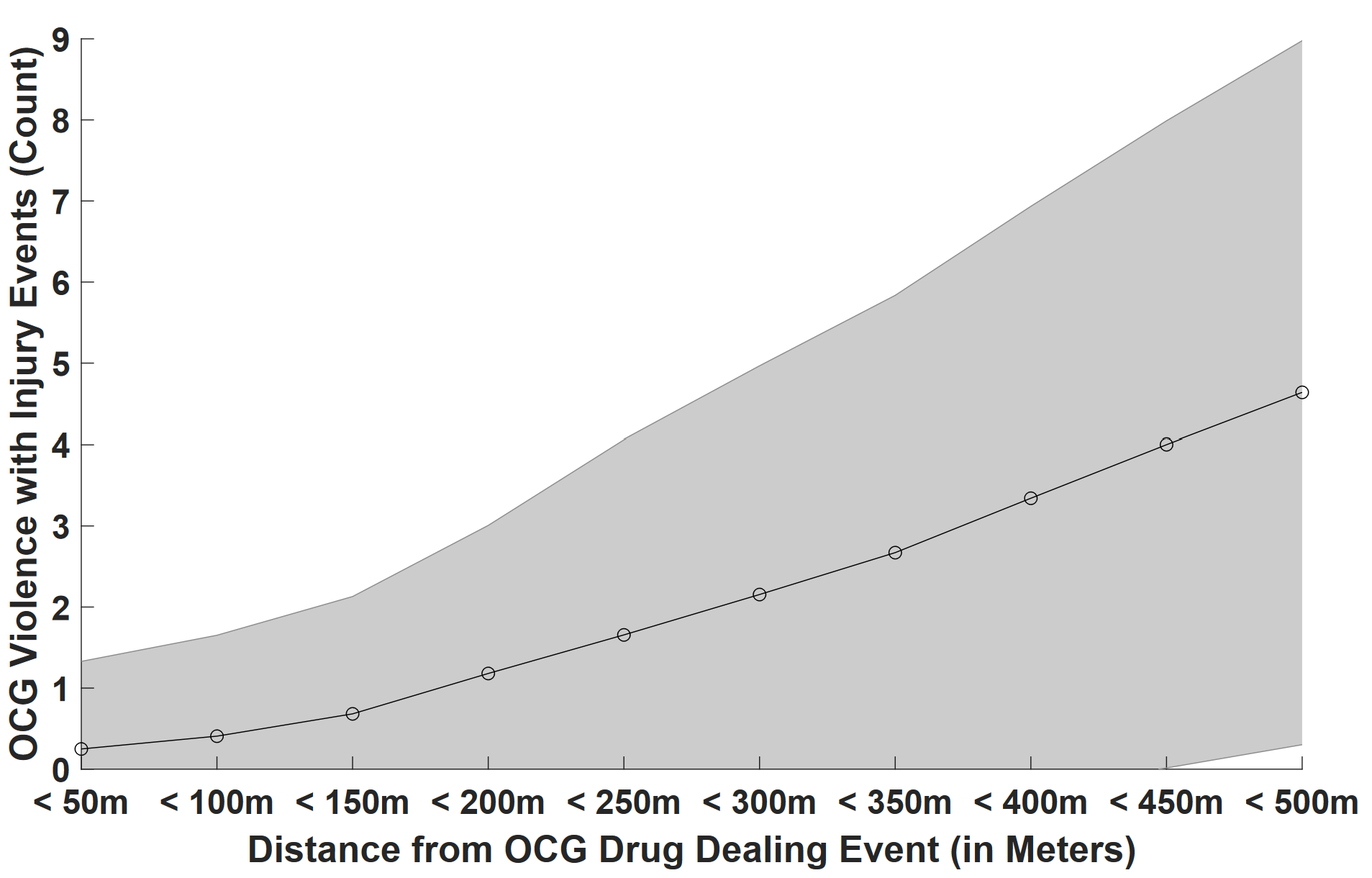
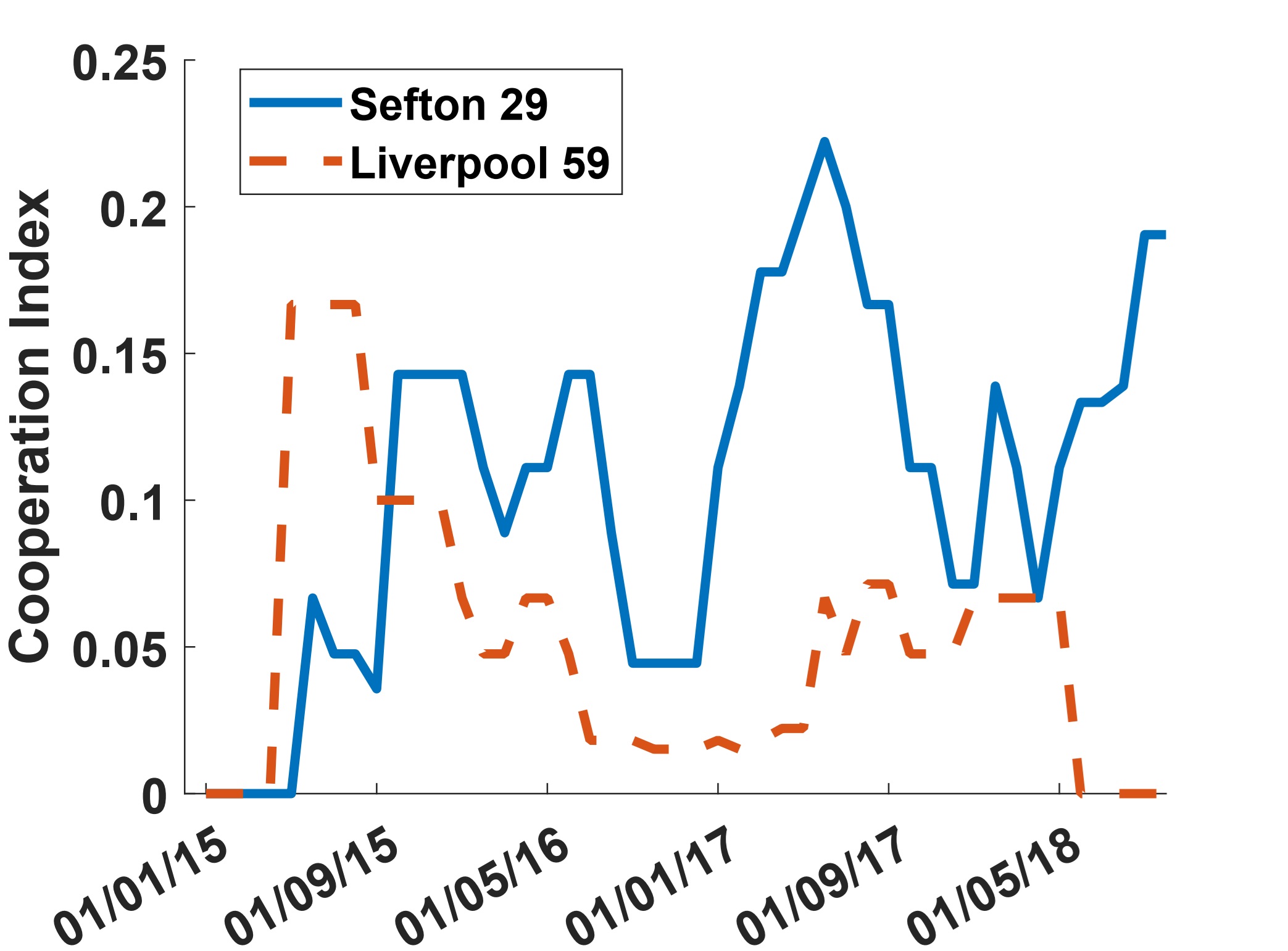
Net of urban and socio-demographic factors, violence is consequential to cooperation failure. Cooperation is differential - it is more likely to realize between groups characterized by asymmetric control of territory - and selective, with a positive relationship between expected returns (and associated risks) and the intensity of cooperation. In other words, cooperation and violence are two sides of the same coin: violence tends to erupt as a result of a breakdown in cooperation within the OCG milieu.
Why Does it Matter?
Our work points to four policy implications. First, it highlights the importance of considering self-organised groups of offenders as strategic entities when developing interventions aimed at curbing their activities and broader illegal markets; understanding how groups select their partners and opportunities improves the efficacy of interventions. Second, interventions aimed at curbing OCG-related violence need to take into account the structure of cooperation among the OCGs active in an area, as violence is likely to erupt following a breakdown in cooperation. Third, our findings stress the importance of group-level relational mapping for understanding illicit markets and adverse dynamics at the community level. Finally, this work offers a novel way of measuring turf control and a new index of cooperation that analysts can use when developing evidence-based interventions and tracking their subsequent short- and medium-term consequences (including unintended ones).
Team:
- Dr Andrea Giovannetti, Australian Catholic University (andrea.giovannetti@acu.edu.au)
- Prof Paolo Campana, University of Cambridge (pc524@cam.ac.uk)